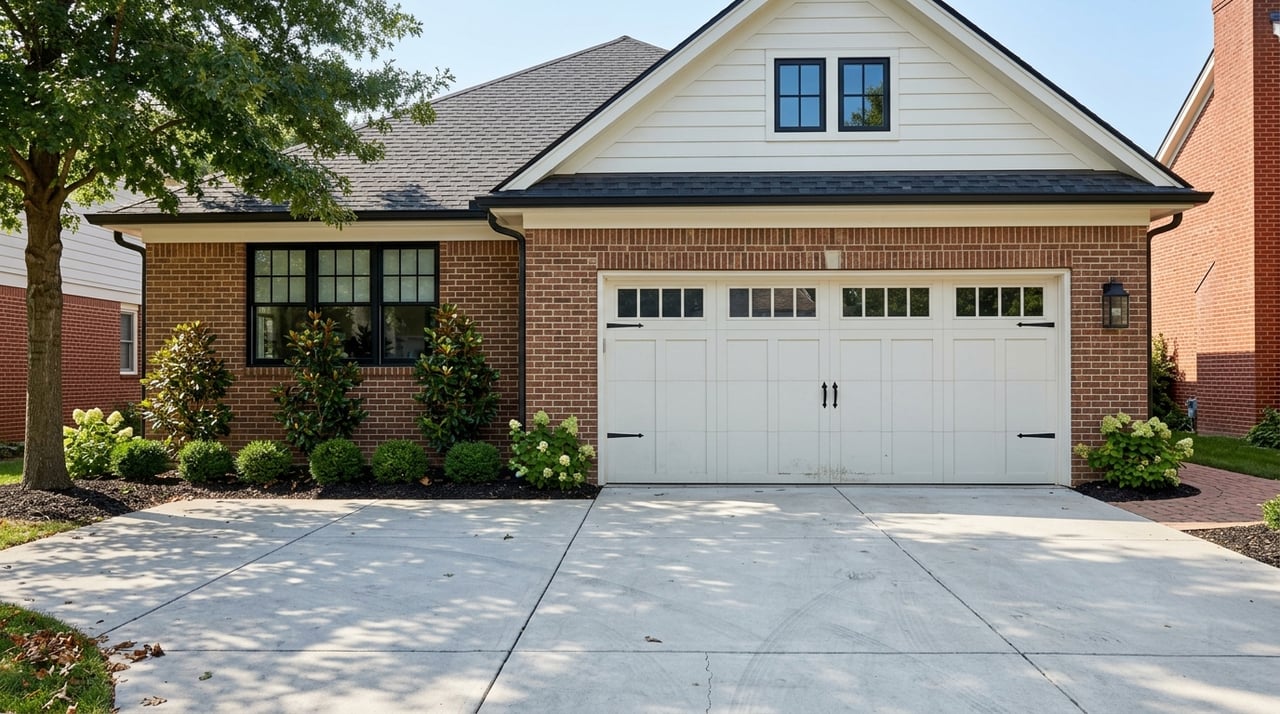
How to Price Your Alpharetta Home to Sell Today
Wondering why one Alpharetta home gets strong interest in the first week while another sits and chases the market with price cuts? In today’s market, pricing is not about picking the highest number you can justify. It is about understanding how buyers are reacting right now, how your home compares to nearby competition, and where your property fits within Alpharetta’s many distinct pockets. If you want to list with confidence and protect your bottom line, let’s dive in.
Alpharetta is not acting like a runaway seller’s market in the latest data. Recent reports show average and median values softening year over year, homes taking roughly 22 to 41 days to move depending on the source, and sale-to-list ratios hovering around 99%.
That matters because it points to a market that rewards accurate pricing more than optimistic pricing. Realtor.com classified Alpharetta as a balanced market in May 2026, Zillow reported that 65.8% of sales closed under list price, and Redfin showed that 29.9% of homes had price drops.
In plain terms, buyers are still active, but they are disciplined. With the 30-year fixed mortgage rate at 6.43% as of July 2, 2026, payment sensitivity also remains part of the conversation, which can limit how far buyers will stretch beyond the local comp range.
A citywide median can give you context, but it should not set your list price. Alpharetta is too varied for that approach to work well.
The latest zip-code data shows meaningful differences across the city. Realtor.com reported median listing prices around $865,000 in 30009, $784,500 in 30005, and $725,000 in 30022. Price per square foot also varied, from $335 in 30009 to $246 in 30022.
That spread is a big reason sellers can get into trouble by leaning too heavily on broad market headlines. Your home is not competing with every listing in Alpharetta. It is competing with the most relevant homes in your immediate area, at your price point, with a similar lot, layout, and condition.
Even within Alpharetta, market conditions shift from pocket to pocket. In the latest Realtor.com data, 30005 was classified as a hot seller’s market with a 99% sale-to-list ratio and 34 median days on market, while 30009 was labeled balanced with a 98% sale-to-list ratio and 41 days.
Neighborhood-level differences are even more useful when you are setting a strategy. In May 2026, median listing prices and days on market varied widely, including Windward at $999,000 and 34 days, Ocee at $620,000 and 36 days, Rivermont at $494,499 and 39 days, Old Roswell Villas at $687,499 and 64 days, and Crabapple at $889,000 and 60 days.
That is why smart pricing is built from the closest competitive set. If your home is in Windward, a citywide median tells you very little. If your home is near Downtown Alpharetta, North Point, or another major activity area shaped by city planning, that location context can also affect buyer demand and your realistic price ceiling.
Two homes can look nearly identical online and still need different pricing strategies. Small differences often shape buyer demand more than sellers expect.
Here are some of the factors that can affect value in Alpharetta:
School-path geography is one example of how local nuance matters. Alpharetta High School’s official profile places it in the Northwest Learning Community with feeder patterns that include Creek View Elementary, Lake Windward Elementary, Manning Oaks Elementary, New Prospect Elementary, Ocee Elementary, Hopewell Middle, and Webb Bridge Middle. Even when homes are close together, differences in school-path geography can influence buyer attention and pricing strategy.
One of the biggest pricing mistakes sellers make is assuming buyers will overlook deferred maintenance. In a balanced market, that usually does not happen.
Buyers compare your home to nearby options that may already feel move-in ready. If your roof, paint, landscaping, or interiors need work, that gap should be reflected in the list price rather than left for buyers to discover and discount on their own.
Seller-prep research from 2025 showed that real estate professionals most often recommended decluttering, deep cleaning, and improving curb appeal before listing. Painting and making sure the roof is up to par also ranked high, which reinforces a simple point: the basics still matter.
If you recently renovated, that can absolutely support your price. But the market does not usually pay back every dollar you spent.
According to NAR’s 2025 Remodeling Impact Report summary, a steel front door showed 100% cost recovery, a fiberglass front door 80%, a complete kitchen renovation or minor kitchen upgrade 60%, and a bathroom renovation 50%. Those numbers are a good reminder that renovations can improve appeal and competitiveness, but they do not automatically create a dollar-for-dollar jump in value.
This is where a construction-savvy pricing conversation becomes especially helpful. You want to separate updates that genuinely improve market position from upgrades that mostly improved your enjoyment of the home.
Staging can be a smart tool, especially if you want your home to photograph well and make a stronger impression in person. But it works best when it supports an already sound pricing strategy.
In NAR’s 2025 staging report, 29% of agents said staging led to a 1% to 10% increase in the dollar value offered, and 49% said it reduced time on market. That is meaningful, but it does not mean staging can overcome a list price that is out of step with the comp set.
A well-prepared home often gets better early traction. In today’s Alpharetta market, that early traction matters because overpricing can quickly lead to extra days on market, reduced leverage, and eventual price reductions.
Many sellers ask whether it is better to start high and reduce later if needed. In this market, that strategy often works against you.
When a home launches too high, buyers may skip it entirely or wait to see if the price changes. As days on market grow, the listing can start to feel stale, and later reductions may not fully restore the lost momentum.
That risk is especially relevant in Alpharetta right now. With sale-to-list ratios near 98.5% to 99%, a large share of homes selling under list, and a noticeable portion of listings taking price drops, there appears to be limited reward for aspirational overpricing.
The strongest pricing strategy starts with recent sold comps in the closest possible micro-market. From there, you adjust based on the details that buyers actually respond to.
A practical pricing process often looks like this:
This approach is more grounded, and it often protects your negotiating position. When your home enters the market aligned with what buyers are already seeing and valuing, you give yourself the best chance at strong interest early.
If you are preparing to sell, the key message is simple: price your home as it competes today. Do not rely on a citywide average, your renovation receipts, or the hope that buyers will stretch far beyond nearby comps.
Alpharetta remains a desirable market, but it is not uniform. Zip code, neighborhood, condition, and buyer sensitivity all shape what your home can realistically command.
The good news is that careful pricing is not guesswork. With the right local analysis and a clear-eyed view of your home’s strengths and tradeoffs, you can launch with a strategy designed to attract attention, reduce friction, and support a stronger outcome.
If you are thinking about selling in Alpharetta and want a pricing strategy grounded in neighborhood data, presentation, and practical renovation insight, Casey Schiltz can help you position your home for today’s market.
Stay up to date on the latest real estate trends.

With over 15 years of experience in the real estate industry, Casey has built a reputation for delivering exceptional results for her clients.