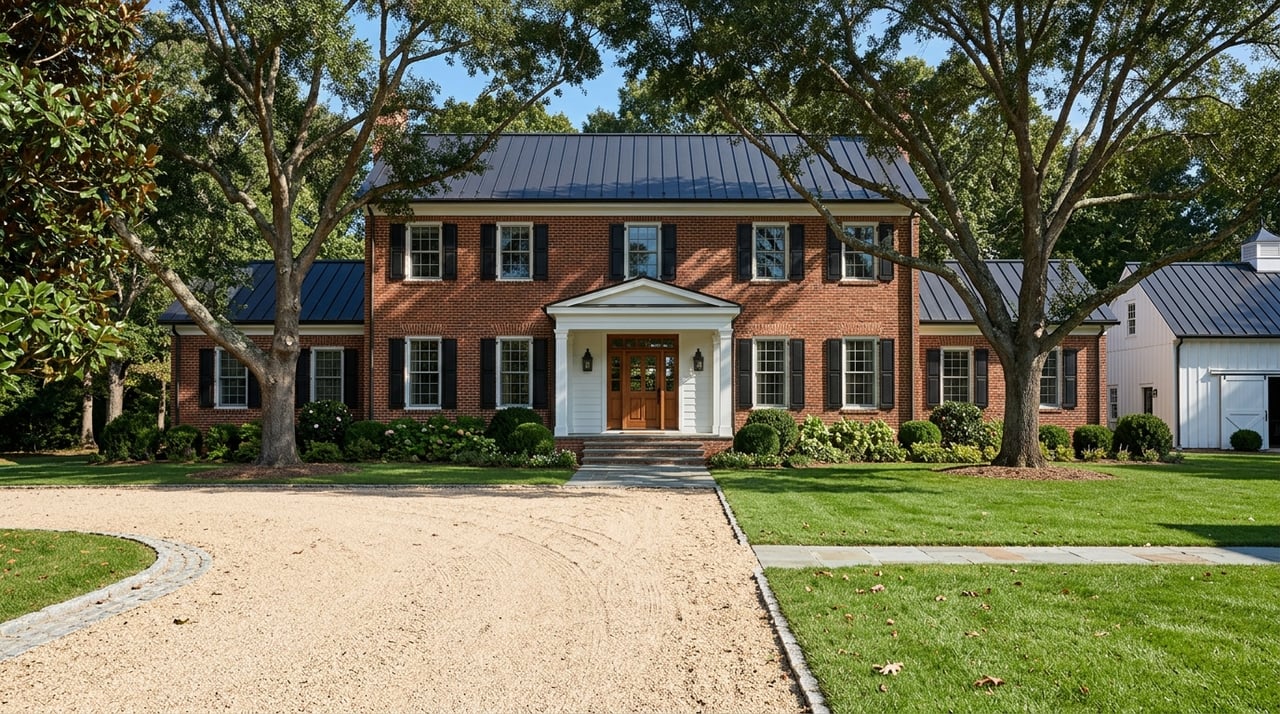
What to Know About Milton GA Equestrian Properties
Looking for space, privacy, and a property that supports a more rural lifestyle without leaving North Fulton? That is exactly why many buyers are drawn to Milton. If you are exploring estate homes, acreage, or horse property here, it helps to understand what makes this market different and why it has stayed that way. Let’s dive in.
Milton is not rural by accident. City planning and budget materials describe it as a deliberately low-density community, and more than 90% of the city’s land remains low or very low density because sewer lines were limited in rural areas.
That policy direction shapes what you experience on the ground. As of the July 1, 2025 Census estimate, Milton has 41,266 residents across 38.49 land square miles, and the city’s FY2026 budget says about 36.15% of land is agricultural or equestrian while 33.78% is residential.
For you as a buyer or seller, that matters. It means the large-lot, estate, and equestrian segment in Milton is supported by long-term planning tools, land conservation efforts, and zoning choices, not just market trends.
In Milton’s Comprehensive Plan, the Agriculture, Equestrian, Estate Residential designation envisions scattered single-family homes on at least one acre, and often several acres. The same planning framework also allows for hobby farms, equestrian facilities, and large-lot estates, including minimum 3-acre lots on gravel roads.
Low Density Residential also means one single-family home on at least one acre. In practical terms, that often translates to homes with longer driveways, more wooded separation, and room for outbuildings or agricultural uses, depending on the parcel and zoning.
Milton also considers any property of 3 acres or more to be a large lot. If you are comparing options, that is a useful benchmark when you are trying to separate a standard large homesite from a true acreage property.
Milton adopted its current Unified Development Code on April 8, 2024. The code includes agricultural districts, residential districts, special purpose districts, and the Rural Milton Overlay, which is intended to preserve agrarian and equestrian character.
That overlay is important because it supports visual harmony, natural setting, and open space. In other words, the surrounding character of a property often matters almost as much as the home itself.
This is one reason Milton continues to stand out in North Atlanta. If you want a property where the setting is part of the value, local land-use policy plays a major role in protecting that experience.
Milton’s Urban Growth Boundaries help distinguish denser nodes around Crabapple and Deerfield/Highway 9 from its more rural corridors. The city identifies areas such as Hopewell, Freemanville, Birmingham, Arnold Mill, and State Route 9 as part of that rural pattern.
That does not mean every parcel in those areas is identical. It does mean you are more likely to find the open-road feel, scenic buffers, and lower-density surroundings that many estate and equestrian buyers want.
The city’s planning documents also repeatedly emphasize rural viewsheds, open space, open road neighborhoods, and protection of agricultural land. For buyers seeking long-term lifestyle value, that consistency can be reassuring.
If you are specifically interested in horse property, Milton has a strong foundation for that lifestyle. The city’s Equestrian Committee exists to protect and promote equestrian activity and farm owners’ interests, and Milton’s 2024 farm census found more than 200 active horse farms around the city.
That is a meaningful signal for buyers. It suggests you are entering a market where horse ownership and farm operations are an established part of the local landscape, not a rare exception.
Milton also continues to prioritize trail connections around parks such as Bell Memorial Park, Birmingham Park, and Providence Park. Horses are preferred on marked trails during daylight hours, and Birmingham Park has received equestrian-friendly upgrades.
Equestrian living in Milton is about more than a barn and a pretty fence line. It usually involves daily decisions around turnout, feed, drainage, fencing, hauling, maintenance, and fire safety.
That practical side of ownership is one reason due diligence matters so much. A property may look horse-ready at first glance, but the real test is whether the land, layout, utility setup, and improvements actually support your intended use.
Milton Fire-Rescue even offers free barn safety evaluations for any Milton barn or stable owner. That reflects the very real operational needs that come with managing a horse property well.
Not every acreage parcel in Milton works the same way. Zoning and animal rules can vary, and those details can affect how you use the property.
Outside agricultural zones, Milton’s animal-control code caps horses, mules, asses, and cows at five per premises, with square-footage rules on non-agricultural land. If your goal is to keep horses on-site, that is one of the first things you should verify.
You should also confirm the current zoning under Milton’s Unified Development Code rather than relying on older assumptions. This is especially important for buyers looking at land, barns, outbuildings, or properties with future improvement plans.
One of the biggest differences between a neighborhood home and an estate or equestrian property is utility planning. In unsewered areas of Fulton County, properties use onsite sewage management systems, commonly called septic, and plan review is required when onsite sewage systems or individual drinking-water supplies are proposed.
That can affect what you build, how you expand, and how the land functions. A beautiful lot is only as useful as its septic suitability, access, and improvement potential.
Georgia’s Department of Public Health also says wells must be installed by a licensed water well contractor, and the county health department must be notified before construction. If a property depends on a private well, that becomes a key part of your review process.
If you are buying acreage in Milton, a strong due diligence process can protect both your lifestyle and your investment. The right questions early on can save you time, money, and frustration later.
Here are some of the main items to review:
This is where a construction-aware real estate advisor can be especially helpful. When you are evaluating land, improvements, or renovation potential, the details behind the listing matter.
Milton’s estate and equestrian segment persists because the city has consistently backed it through planning, conservation, and policy. The Rural Milton Overlay, Urban Growth Boundaries, land conservation work, Greenprint planning, and the 2016 greenspace bond all support that direction.
Public support has also been clear. Milton’s 2016 greenspace bond passed with 82.86% of voters, reinforcing the city’s commitment to protecting countryside character and open space.
For buyers, that makes Milton’s acreage lifestyle feel more durable. For sellers, it helps explain why well-positioned estate and equestrian properties continue to attract strong interest from buyers who value land, privacy, and a setting that feels intentionally preserved.
If you are buying in Milton, look beyond square footage and finishes. The real value of an estate or equestrian property often comes from the land plan, utility setup, permitted uses, and how well the parcel supports the life you want to live.
If you are selling, it helps to present the property through that same lens. Buyers in this segment tend to care about acreage, trail access, barn utility, zoning clarity, conservation context, and the quality of the setting as much as the home itself.
That is why local knowledge matters here. In a market like Milton, understanding not just the house but the land is what leads to better decisions.
If you are considering a move in Milton, whether you are searching for a horse-ready property, evaluating land, or preparing an estate home for sale, working with an advisor who understands both market positioning and property fundamentals can make the process much smoother. Connect with Casey Schiltz for thoughtful guidance tailored to Milton’s unique estate and equestrian market.
Stay up to date on the latest real estate trends.
With over 15 years of experience in the real estate industry, Casey has built a reputation for delivering exceptional results for her clients.