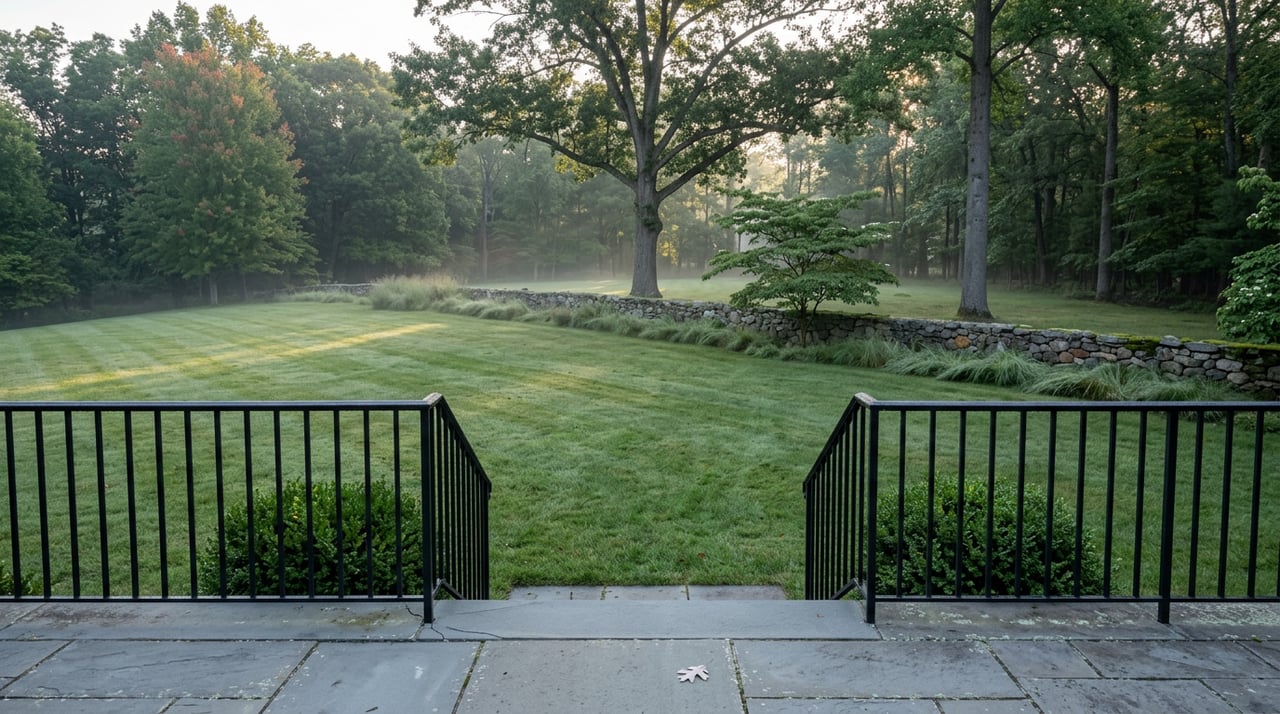
Milton GA Trails: What Changed at Milton’s 2 Parks
Why would a city spend two years and roughly three million dollars adding trail mileage, boardwalks, and a fishing pier to one park, while at the same park district ropes off a stretch of a completely different trail and tells people to stay off it for a while? That's exactly what Milton has done in 2026, and if you walk these trails regularly, the contrast is worth understanding rather than just noticing.
Milton City Park and Preserve, the 137-acre former golf course off Dinsmore Road, got bigger this year. Birmingham Park, three miles south and built around horses as much as hikers, got smaller in one specific section, on purpose. Both moves came from the same Parks and Recreation Department in the same city budget cycle. They are not contradictory. They are the clearest evidence available right now for how Milton actually thinks about its greenspace: some of it is built infrastructure meant to take heavy use, and some of it is working land that can only take so much before it starts to break down.
Mayor Peyton Jamison cut the ribbon on February 25 at Milton City Park and Preserve, marking the completion of new trail added to the original 1.25-mile loop that opened back in 2022. The result is a continuous 2.5-mile trail through the property's North Woods, and it now comes with features the first phase never had: boardwalks over water, a pier where people can fish, and solar-powered fountains in the ponds. Parks and Recreation Director Tom McKlveen called it a change that should transform how people actually use the park, and that's not a small claim for a property that used to be a golf course with a members-only gate.
The construction contractor, Triscapes, spent months replacing the old cart-path drainage system with green stormwater infrastructure, bioswales and rock weirs instead of pipes and catch basins, aimed at improving water quality flowing into Chicken Creek. That's the kind of engineering that doesn't show up in a photo but explains why this project took as long as it did and cost what it did. Funding came from a mix of sources: a Georgia Outdoor Stewardship Program grant, American Rescue Plan Act dollars, and the region's transportation sales tax, TSPLOST.
If you haven't walked it since before the closure, expect a longer loop with more shade variation and considerably more to look at along the way than the original stretch offered.
The passive trail work is finished, but MCPP's 7-acre active core, the section with the pool, the tennis center, and the Community Center, has its own project queued up for later in 2026. Plans call for reconfiguring the parking lot, adding six tennis courts total (two more than the current count) along with a viewing pavilion, upgrading site lighting, and building a new playground. None of that touches the nature trail. It's a separate renovation of the part of the property that was always meant for structured recreation rather than passive greenspace, and it's worth knowing about if you use the tennis center or park in that lot regularly, since some disruption should be expected once that work begins.
As Citizen Portal reported, here's where the contrast gets specific. Birmingham Park is Milton's equestrian park: nine multi-use natural surface trails, color-coded (Blue, Green, Yellow among them), built for horses, hikers, and everyone in between on unpaved creekside terrain. Parks staff recently replaced a failing culvert on the Blue Trail specifically to reduce injury risk to horses crossing it. That's maintenance. What's happening on the Green Trail is different.
City parks staff briefed Milton's Equestrian Committee this past fall that the Green Trail, which runs adjacent to Little River, is being pulled back from regular use so the shoreline vegetation can recover. As quoted by Citizen Portal, Jen Young, speaking for the parks department, put it plainly:
"The more we ride back there, the more it's just causing damage and problems to that area."
The plan isn't to close the trail forever. It's to let the sensitive section rest while routing traffic around it, the same logic a golf course superintendent uses when they close a green for aeration. The difference is that Birmingham Park doesn't have MCPP's engineered stormwater system underneath it. It's natural surface trail on a floodplain, and repeated hoof and foot traffic in the same spot does real damage that pavement and gravel don't.
| Milton City Park & Preserve | Birmingham Park | |
|---|---|---|
| Origin | Former golf course, city-owned since 2018 | Long-standing equestrian and multi-use trail park |
| Surface | Engineered gravel trail with stormwater infrastructure | Natural surface, creekside terrain |
| 2026 status | Just expanded to a continuous 2.5-mile loop | One section (Green Trail) resting for habitat recovery |
| Primary use | Walking, running, fishing | Horseback riding, hiking |
| What's next | Active-core renovation (tennis, parking, playground) later in 2026 | Grant-funded upgrades pending, detailed below |
Money follows use, and the numbers here make the case better than any explanation could. Milton applied for a Recreational Trails Program grant through the Georgia Department of Natural Resources specifically for Birmingham Park, and this spring the state announced the city's project was one of 17 selected statewide. The grant covers $200,000, roughly half the total project cost, with the city matching the rest.
What that money is slated to fund at Birmingham Park:
None of that is glamorous. It's the kind of infrastructure spending that only makes sense if you already understand this park gets used hard by a specific group of residents, equestrians who need trailer access and safe stream crossings, not a general recreation crowd looking for a scenic loop.
Birmingham Park's upkeep isn't purely a city budget line. The Parks Department has partnered with the Milton Historical Society to document the park's history and plans to offer guided hikes built around that research. The annual volunteer trail cleanup has drawn as many as 56 people in past years, and the city has been recruiting crew leaders to help organize and staff the next round of cleanup days. That's a level of hands-on community involvement you don't see at every city park, and it lines up with the same theme: Birmingham Park runs on stewardship as much as it runs on a maintenance budget.
The practical takeaway is simple. If you're choosing between the two parks for a weekend outing, know what kind of trail you're actually walking into. MCPP is built infrastructure now, engineered to handle heavy daily traffic, and the 2.5-mile loop with its boardwalks and pier is ready for regular use today. Birmingham Park is working land, and one of its trails is intentionally quieter right now so it can hold up for years to come. Expect the Green Trail rerouting to stick around for a while, and expect the restroom, parking, and bridge upgrades funded by this year's DNR grant to show up as construction activity sometime after the grant funds are released.
Either way, Milton isn't treating its greenspace as one undifferentiated amenity. It's managing two different kinds of land with two different playbooks, and that distinction is exactly the sort of detail that tells you more about how a city operates than either project would on its own.
If you're curious how decisions like these, greenspace investment, infrastructure upgrades, the kind of stewardship that shapes a neighborhood's character over time, tend to factor into how North Milton properties hold their value, that's a conversation worth having. Casey Schiltz has spent years watching how this city grows and would be glad to talk through what it means for your corner of it. Schedule a consultation whenever you're ready.
Stay up to date on the latest real estate trends.

With over 15 years of experience in the real estate industry, Casey has built a reputation for delivering exceptional results for her clients.