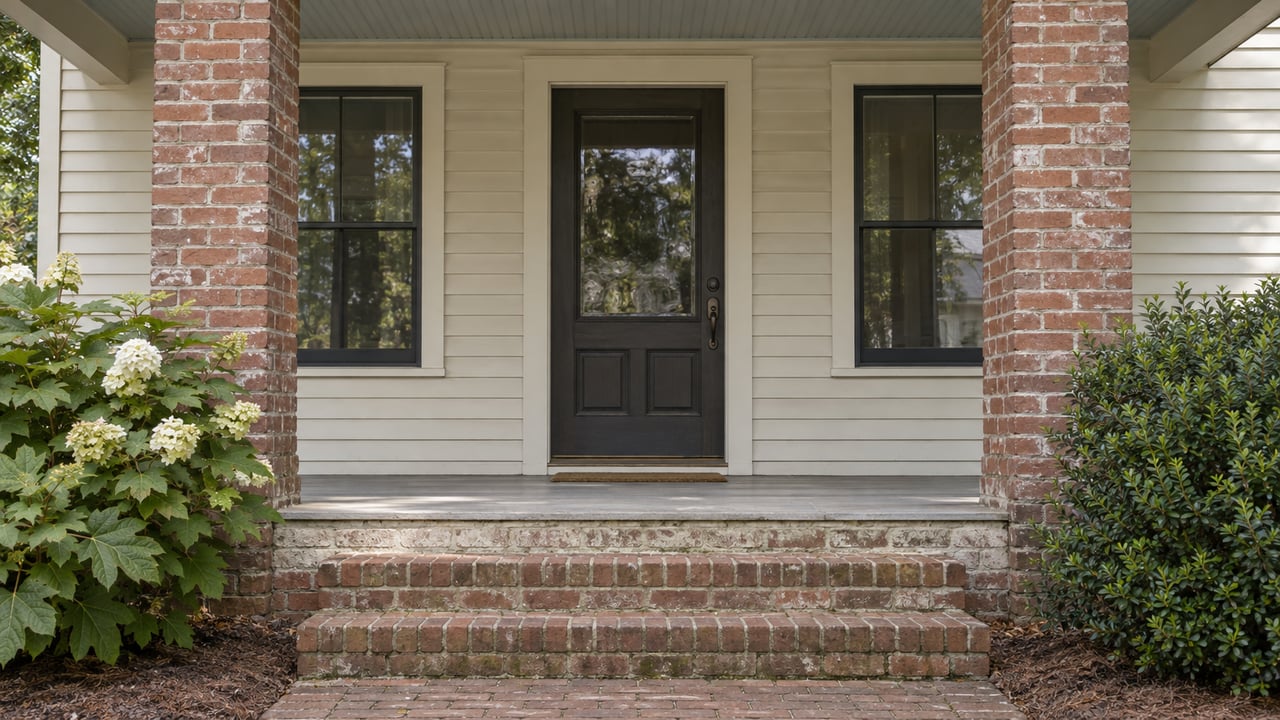
The Grant Park Home That Passes Inspection and Still Loses Its Insurance
The inspection report on a Cherokee Avenue Victorian comes back with the usual list: a few worn gutters, a hairline crack in the plaster, a water heater with a few years left in it. Nothing that changes the offer. Then, nine days before closing, the buyer's insurance agent calls, and the conversation isn't about the roof or the porch. It's about the panel in the basement, and whether the home still has any of its original wiring behind the walls.
That call is the real gatekeeper in Grant Park real estate, more often than the inspection itself. The neighborhood's housing stock is exactly what makes it desirable: Victorian mansions and Queen Anne and Folk Victorian houses closer to the park, Craftsman bungalows filling in the streets around it, most of it built between the 1890s and the 1940s. That same age is what puts a second, quieter negotiation on the table after the first one is done. It happens between the buyer and an insurance underwriter, and it has nothing to do with how the home looks.
Homes built before the 1940s in the Atlanta area were commonly wired with a knob-and-tube system, and Grant Park's building era falls squarely inside that window. The wiring itself was sound for its time, rated for a 30- or 60-amp household running a handful of light fixtures. It was never built for the load a modern home puts on it: HVAC, kitchen appliances, and everything else that draws power today. It also has no ground wire, which means outlets that look like standard three-prong plugs on a knob-and-tube circuit aren't actually grounded, no matter what they look like.
None of that stops the wiring from being legal. What it stops is the insurance. Most major carriers won't write a new policy on a home with active knob-and-tube wiring, and the handful that will typically charge more for it. Some will offer coverage on the condition that the wiring is replaced within a set window after the policy binds, often 30, 60, or 90 days, which means a buyer can close on the home and still be racing a deadline they didn't know they'd signed up for. A full rewire on a typical Atlanta-area home generally runs three to five days of on-site electrical work, though scheduling the inspection and any drywall repair afterward can stretch the total timeline further.
The plumbing tells a similar story from a different direction. Homes from Grant Park's era were built when clay and cast iron were the standard for sewer lines, and both materials crack, corrode, and shift over decades. Cast iron pipe has an average life expectancy of 40 to 60 years, which puts most of the neighborhood's original lines well past their expected service life. Grant Park is named directly, alongside Kirkwood and Decatur, as one of the intown areas where this shows up most often, and tree roots are the recurring cause: Atlanta's mature tree canopy sends roots hunting for moisture, and a buried sewer line is the easiest target they find, moving in through joints and hairline cracks. A standard home inspection doesn't reach that pipe at all. It takes a separate sewer scope, a camera run down the line from the cleanout, to find out what's actually happening underground. One documented case in the neighborhood involved a homeowner whose cracked cast-iron drain line and corroding water lines led to basement flooding and a full plumbing rebuild, the kind of repair that starts as a slow drain and ends as an excavation project.
| System | Era It Shows Up | What Insurers or Code Actually Require | Typical Timeline Once You're Under Contract |
|---|---|---|---|
| Knob-and-tube wiring | Homes built before the 1940s | Many carriers decline outright; others bind coverage conditionally on a rewire within a set window | Rewire itself: 3-5 days on-site, plus scheduling for licensed electrician certification |
| Cast-iron or clay sewer line | Homes built 1890s-1940s | Not part of a standard home inspection; requires a separate sewer scope | Camera scope: about an hour; repair timing depends on whether it's a spot fix or a full line replacement |
| Aluminum branch wiring | Additions or updates from 1965-1973 | Some insurers require COPALUM or AlumiConn connectors at every splice point before binding | Varies with the number of splice points found in the panel and walls |
The pattern across all three rows is the same. None of these conditions show up on the surface of a listing. None of them change what the home looks like from the street or from the open house. All three surface only when someone with the right expertise goes looking, and all three can reopen a negotiation, delay a closing, or in the case of an insurance decline, threaten the deal outright.
Trackers following Grant Park through the spring and summer of 2026 don't agree with each other, and that disagreement is itself worth reading. Median home value estimates for the neighborhood this year land somewhere in the high $500,000s to just over $600,000, generally trending upward from the year before. Days-on-market estimates for the same period are far less consistent: some trackers show homes moving in about a month, others show the same neighborhood averaging well over two months, with one showing the average stretching from 56 days a year earlier to 81 days this year.
That spread isn't noise. It reflects two different markets sitting inside one zip code. A fully renovated Victorian or bungalow with updated systems, the kind that already cleared its insurance and electrical hurdles during a previous owner's renovation, moves fast and draws multiple offers, consistent with the neighborhood's reputation for homes going under contract quickly. A home with original wiring and an unscoped sewer line takes longer, not because buyers don't want it, but because the closing timeline has to accommodate an electrician's certification, a sewer camera, and sometimes a second or third insurance quote before the underwriting question gets answered. The median price tells you what a typical Grant Park home costs. It doesn't tell you which of these two timelines you're actually buying into, and that's the number a comparison shopper on a portal listing never sees.
Grant Park became a local historic district in 2000, with an expansion in 2003, which means exterior changes to a home inside the district boundary go through a review separate from the standard building permit. A buyer planning to rewire the interior faces no design review at all, since that work is invisible from the street. A buyer planning a porch rebuild, a window replacement, or an addition alongside that rewire is working two timelines at once: the electrical and plumbing work happening on its own schedule, and the exterior work waiting on a design review that has its own calendar. Neither timeline is long on its own. Running them without knowing they're separate is what turns a six-week renovation plan into a three-month one.
Does a Georgia seller have to disclose knob-and-tube wiring or an aging sewer line? Georgia's seller disclosure statement asks about known material defects, and a seller who knows the home has active knob-and-tube wiring or a documented sewer issue should disclose it. A seller who has never had the sewer line scoped or the wiring inspected may genuinely not know what's behind the walls, which is exactly why a buyer's own inspection and sewer scope matter regardless of what the disclosure says.
Can a Grant Park home with original wiring still get insured? Sometimes. Specialty carriers that focus on older and historic homes will occasionally insure a home with knob-and-tube in place if a licensed electrician certifies the system is undamaged, unmodified, and free of insulation contact. It's a narrower path than a standard policy, and it's worth confirming before waiving a due diligence contingency.
Does the standard home inspection cover the sewer line? No. A general home inspector evaluates what's visible. The sewer line runs underground from the cleanout to the street connection, and seeing inside it requires a separate camera inspection, typically arranged alongside the standard inspection rather than in place of it.
If the rewire only takes a few days, why do these deals still slow down? The electrical work itself moves fast. What extends the timeline is everything around it: scheduling the licensed electrician, getting the certification the insurer wants in hand, and coordinating that against a sewer scope, a possible repair, and in some cases a design review for exterior work. Each piece is quick. Lining them up in the right order is where the time goes.
Grant Park's charm was never really in question. What separates a smooth close from a stressful one is knowing, before the offer goes in, which of these systems are still original and what that means for the timeline ahead.
If you're weighing a Grant Park property and want a clear read on what's behind the walls before you write an offer, Casey Schiltz can walk the construction side of the decision with you alongside the real estate side.
Stay up to date on the latest real estate trends.


With over 15 years of experience in the real estate industry, Casey has built a reputation for delivering exceptional results for her clients.