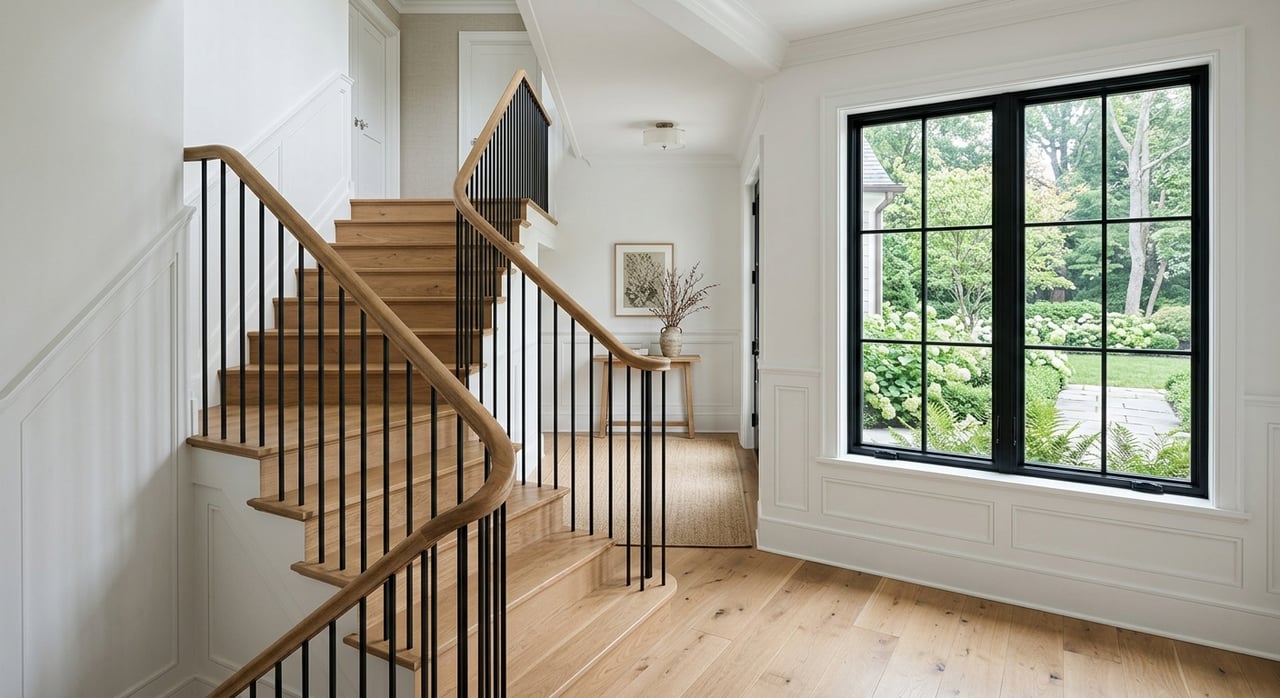
Build or Renovate in Milton GA: Choose Your Best Move
If you love where you live in Milton but your home no longer fits your needs, you are not alone. Many homeowners here reach the same crossroads: should you renovate the house you have, or start fresh with a new build? In a market where lot value, neighborhood character, and finished quality all carry real weight, the right answer depends on more than style preferences. This guide will help you weigh timing, cost-efficiency, property constraints, and resale considerations so you can make a smarter move with confidence. Let’s dive in.
Milton is not a one-size-fits-all market. According to the U.S. Census Bureau’s Milton quick facts, the city had an estimated 2024 population of 41,490, a 72.5% owner-occupied housing rate, and a median owner-occupied home value of $789,000. Median household income was $171,295, which helps explain why many homeowners here view building or renovating as a long-term investment decision rather than a quick update.
Milton also sits in a high-price segment where execution matters. Redfin’s Milton housing market data reported a March 2026 median sale price of $1.07 million, while the research report notes Realtor.com reported a median home sale price of $1.44 million. Even with different methodologies, the message is clear: buyers in Milton are paying attention to lot quality, layout, and the overall fit of the home within its setting.
The city’s planning approach also shapes your decision. Milton states that more than 90% of land within city limits is low or very low-density residential, and its planning materials emphasize preserving the city’s rural landscape and character while focusing denser activity in areas like Crabapple and Deerfield/Highway 9. You can review that framework in Milton’s urban growth boundaries information.
Building new is often the better choice when the current house no longer works at a basic level. If the floor plan is outdated, the structure is compromised, or the home would need such extensive changes that you are essentially rebuilding anyway, starting over may give you a cleaner result.
This can be especially true in Milton when the lot itself is the real asset. The city’s character-area materials describe rural-residential patterns, equestrian estates, and residential subdivisions with lots over one acre, and Milton considers a property of 3 acres or more a large lot. On the right parcel, a new build can help you create a home that better matches the site and your long-term goals.
A custom build also makes sense when you want features that are difficult to retrofit. Think first-floor primary suites, larger indoor-outdoor living areas, modern energy-efficient systems, or a layout designed around how you actually live now. In those cases, renovation can become a series of compromises.
In Milton, building new is never just a design decision. It is also a permitting and approvals decision. The city requires building permits for all construction activity, and Milton’s building department notes that residential permits are generally required for new single-family homes, additions, basement finishes, sheds, and many system upgrades.
The city also states that once a permit has been accepted for review, approval or revision comments are issued within 10 business days. All permits must be completed through the CityView portal, and no work can begin until a pre-construction inspection is completed. That means even a well-planned project needs time, paperwork, and coordination before construction starts.
Some properties involve even more review. According to Milton’s land development requirements, a Land Development Permit is required if a project exceeds 1 acre of land disturbance, is within 200 feet of state waters, or creates more than 5,000 square feet of new impervious surface. The city also protects stream buffers and tree canopy, including 50-foot stream buffers with an added 25-foot no-impervious-surface area and tree removal rules for protected trees.
In some cases, design review comes into play too. Milton’s Design Review Board reviews plans for new construction, new site development, certain significant alterations, and demolition requests. If you are thinking about a tear-down and rebuild, this adds another layer to your timeline.
A new home is usually a longer-horizon project than many buyers expect. The U.S. Census Bureau’s construction timing data shows that new privately owned residential buildings in the South averaged 7.6 months from start to completion in 2022. That is construction time only, not the full local design, permitting, and approval process.
In practical terms, a custom build or tear-down in Milton should be approached with patience. If your timeline is tight, that may push renovation higher on your list.
Renovation is usually the stronger option when the location already works, the lot is desirable, and the structure is fundamentally sound. If you like your property, your street, and your daily routine, improving what you already have can be less disruptive than starting over.
In Milton, renovation can also reduce approval complexity, especially if your project is more cosmetic than structural. The city’s residential permit guidelines say permits are generally required for projects such as kitchens, bathrooms, decks, garages, windows, structural work, and additions. However, permits are not generally required for paint, floor coverings, cabinets, countertops, or general maintenance.
That distinction matters. A lighter refresh can often move faster and with less friction than a major reconfiguration. If your goal is to improve function, update finishes, and protect resale value, renovation may offer the more efficient path.
If resale is part of your thinking, not all projects perform equally. The 2025 Cost vs. Value Report from Zonda found that exterior-focused projects and minor kitchen improvements were among the strongest national performers for cost recouped. The report lists a minor kitchen remodel at 112.9% cost recouped and shows that projects like garage door replacement, steel door replacement, manufactured stone veneer, and fiber-cement siding replacement also ranked well.
For Milton homeowners, that supports a practical strategy. If your home already has a strong location and solid bones, visible exterior improvements and selective kitchen updates may do more for value than an expensive full interior overhaul. In a market where buyers already place a premium on lot, setting, and neighborhood character, thoughtful updates often outperform over-improving for the area.
That does not mean luxury renovations never make sense. It means the scope should match the property and the likely buyer pool. In Milton, a smart renovation is usually one that feels consistent with the home, the lot, and nearby comparable properties.
If you are torn between building and renovating, start with four questions.
If the lot is exceptional but the house is not, building may deserve a serious look. Larger parcels, rural-residential settings, and estate-style properties can justify the longer process if the finished home will better match the land.
If the structure is sound and the layout can be improved without extreme changes, renovation is often the cleaner path. If major structural or functional problems exist, building new may be more efficient in the long run.
In Milton, site conditions matter. Trees, stream buffers, impervious surface limits, land disturbance thresholds, and design review can all affect a new build. If you want less regulatory risk, renovation may be easier to manage.
If you plan to stay long term and want a highly customized home, building can make sense even with the added time. If resale discipline matters more, targeted renovation often offers a more predictable path.
| Factor | Build New | Renovate |
|---|---|---|
| Best fit | Outdated home on a strong lot | Good lot and sound structure |
| Customization | Highest | Moderate to high, depending on scope |
| Timeline | Longer | Often faster |
| Permit complexity | Higher | Usually lower for lighter projects |
| Site sensitivity | Major factor | Still important, but often less disruptive |
| Resale approach | Depends on lot and execution | Strong for well-scoped updates |
In Milton, this decision is rarely just about construction cost. It is about land use, permitting, timing, resale strategy, and how your property fits the broader market. A home that looks like a renovation candidate on paper can become a rebuild conversation once you study the lot, while a tempting tear-down opportunity can shift back toward renovation once site constraints are clear.
That is where experienced, construction-aware guidance adds real value. When you understand both the market side and the practical side, you can avoid overspending, under-improving, or choosing a path that creates more delay than expected.
If you are weighing whether to build or renovate in Milton, Casey Schiltz can help you think through the lot, the market, and the likely return on your next move so you can make a decision with more clarity.
Stay up to date on the latest real estate trends.


With over 15 years of experience in the real estate industry, Casey has built a reputation for delivering exceptional results for her clients.